
Short answer: a hand pump lasts only as long as its weakest part. One cheap rod, one badly cut thread or one soft cup seal can stop the whole pump. Every breakdown means a mechanic, lifting tools and days without water, so the money saved on cheap components is usually lost many times over.
We have been making India Mark 2 hand pumps and spares for a long time, and one question comes up again and again: “Why is your part more expensive than the one down the road?” This post is our answer, backed by what the wider hand pump community has learned over the years.
A hand pump works harder than you think
The India Mark 2 is built for heavy community use. The Rural Water Supply Network (RWSN) describes it as a pump for communities of around 300 people. That means thousands of strokes every day, every day of the year, often with children swinging on the handle.
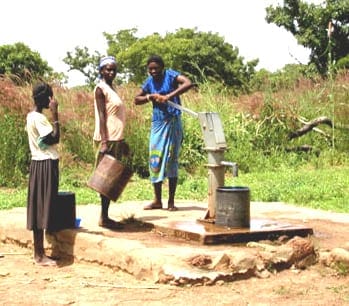
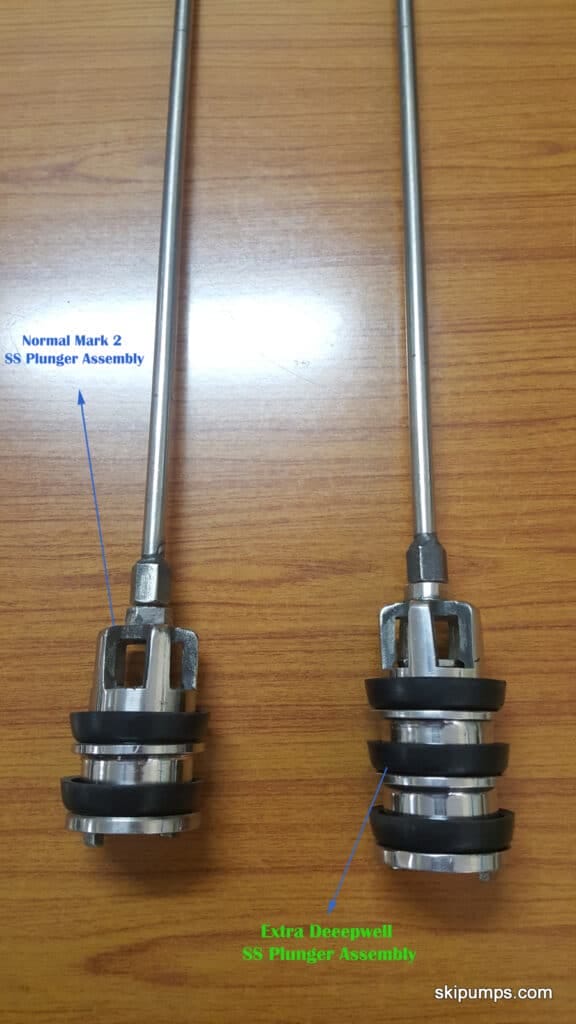
Under that kind of use, every part is working: the handle and bearings above ground, the chain, the rods and riser pipes going down the borehole, and the plunger, seals and foot valve at the bottom. If any one of them fails, the water stops.
What the hand pump community has found
This is not just a manufacturer’s opinion. In 2020 the RWSN started an initiative called Stop the Rot to look at why so many hand pumps fail early. Its reports, written by Dr Kerstin Danert and published in 2022, make for sobering reading:
- Nearly 200 million people in sub-Saharan Africa rely on hand pumps for drinking water, using roughly 700,000 pumps.
- Even after a decade of effort, only about three out of four of those pumps were estimated to be working.
- A big drop in the number of working pumps in the first one to two years after installation is common. That is not normal wear and tear; it is premature failure.
- Poor-quality parts were reported for almost every component of the pump: riser pipes, rods, cylinders, seals, plungers, foot valves, bearings and more.
- In the Zambia case study, good and poor pumps were on sale side by side, and buyers often had no easy way to tell them apart.
When RWSN asked people working in the sector what goes wrong, the most common answers were cheap, poor-quality and fake parts, cost-cutting, and corrosion.
Rust: the fastest way to lose a pump
Standard India Mark 2 pumps use galvanised iron (GI) riser pipes and rods. In normal water that works well. But where the groundwater is acidic (a pH below about 6.5), the galvanising simply gets eaten away. The Stop the Rot research notes that in water with a pH below 6, the zinc coating on rising mains could disappear in three to six months.
After that, things go downhill quickly:
- the water turns rusty, tastes bitter and smells bad, so people stop drinking it;
- pipes start leaking and rods get thinner until they snap;
- eventually the whole pump fails, and families go back to unsafe water sources.
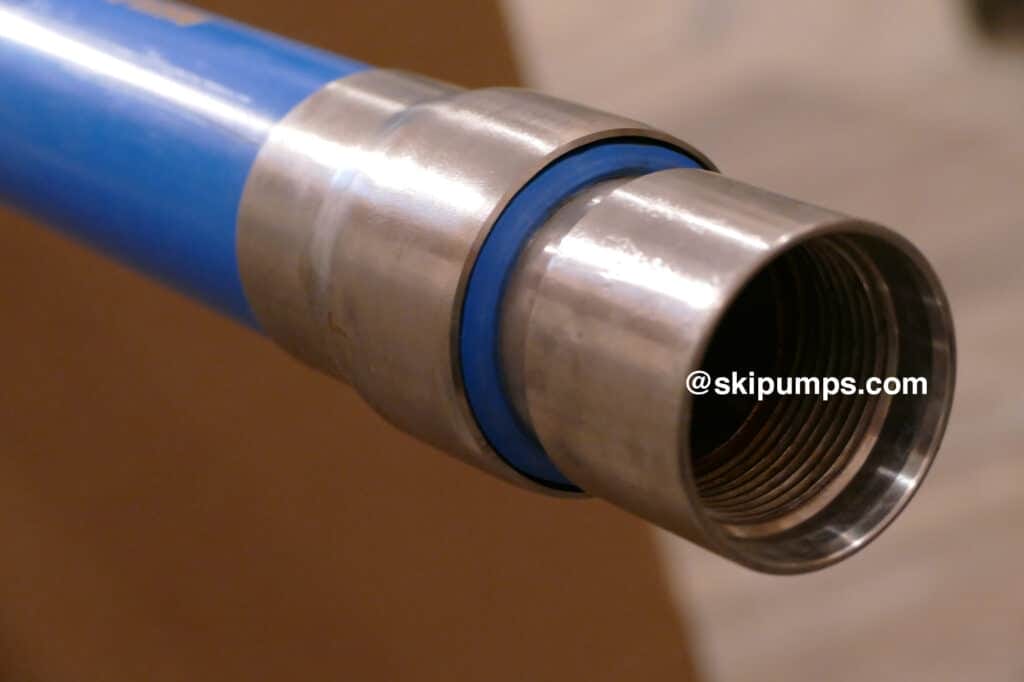
Thin or patchy galvanising makes this much worse, because the protection runs out even sooner. That is why a “cheap” GI pipe with a poor coating is a false saving, and why in corrosive water the right answer is a different material altogether: stainless steel rods, and stainless steel or PVC riser pipes with stainless steel ends (see our SS components and PVC pipes with SS couplings). We compare these options in detail in our post Riser Pipes: PVC with Square Threads, PVC with SS Ends or Mild Steel?
A real example: Ghana
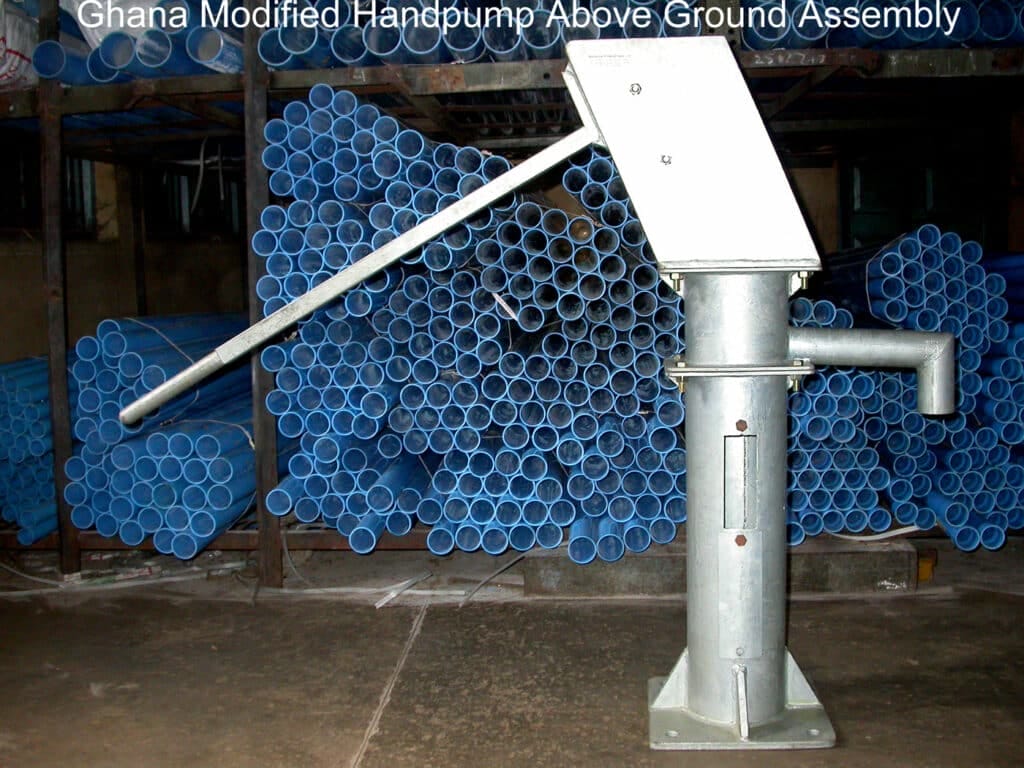
Ghana learned this the hard way in the 1980s. India Mark 2 pumps with GI rods and pipes were corroding in the country’s low-pH groundwater: the water was discoloured, rods broke and pipes cracked. Engineers worked with the University of Darmstadt to test better materials and moved to stainless steel riser pipes and rods, plus an insulating flange to stop corrosion where different metals meet.
The better materials cost roughly three times as much. But by 1992, more than 4,500 of these modified pumps had been installed, and an estimated 90% of them were working. The design was later taken up in other countries too. Spending more on the right parts paid for itself.
The real cost of a breakdown
The price of a part is only a small piece of the story. RWSN points out that servicing an India Mark 2 below ground needs a trained area mechanic, lifting tackle and a proper tool kit; it is not something a village caretaker can usually do alone. So every early failure brings:
- a mechanic’s visit, travel and labour;
- pulling out and refitting the rods and pipes, which can damage other parts;
- the replacement part itself (often bought in a hurry, and often cheap again);
- days or weeks when people walk further or drink from unsafe sources;
- a loss of trust: communities are less willing to pay for upkeep of a pump that keeps breaking.
Add these up over a few years and the “cheap” pump is almost always the expensive one.
How to buy parts that last
You don’t have to be an engineer to buy well. A few simple habits go a long way:
1. Buy to the standard
The India Mark 2 is defined by Indian Standard IS 15500 and the RWSN/Skat specification. Ask your supplier to confirm their parts meet it.
2. Test the water first
If the pH is below about 6.5, don’t install plain GI rods and pipes. Use stainless steel or PVC with stainless steel ends.
3. Inspect before you install
Look for even galvanising, clean and complete threads, straight rods and smooth cylinder linings. Reject anything that looks rough or rushed.
4. Ask for inspection records
A serious manufacturer can tell you how parts are checked and can support third-party inspection for large orders.
5. Use genuine spares
A good pump fitted with poor replacement seals or bearings soon becomes a poor pump. Keep a stock of quality spares.
6. Judge on lifetime cost
Compare the cost of the pump over five or ten years, not the price on the invoice.
The bottom line
A hand pump is a simple machine, but it only stays simple if every part is made properly. Good components mean fewer breakdowns, cleaner water and communities that keep trusting their pump. If you would like to talk about the right pump or parts for your site, or about the water conditions you are dealing with, send us an enquiry and we’ll be happy to help.